Begin with the equipment connection
An IEC equipment power-cord enquiry needs both ends of the assembly, the selected electrical rating and the finished length. A connector family name identifies only part of the requirement.
The IEC 60320 series addresses appliance couplers. Familiar references such as C13/C14 and C19/C20 identify different mating families. Manufacturer coupler charts distinguish cable connectors, equipment inlets and interconnection components; keep the actual role of each connection clear in your enquiry.
For example, when the receiving equipment has a C14 inlet, identify the corresponding C13 cable connector explicitly. For a C20 equipment inlet, identify the C19 cable connector. Confirm the actual mating interface and equipment requirements rather than selecting from an outline photograph alone.
Use the IEC Equipment Power Cords range as a catalogue starting point. Then review the selected product's complete assembly description.
Describe the complete path from supply to equipment
Supply end
State the actual receiving socket or supply-side connection, including the regional plug or interconnection reference. Add the destination market and the relevant equipment documentation.
Equipment end
Identify the equipment inlet and the required cable connector. Include straight or angled geometry, exit direction and any clearance or locking requirement.
A cord for a wall outlet and a lead between a UPS or PDU and equipment can have different supply-side interfaces. Label each end on the drawing or photograph to prevent the direction of the assembly being misunderstood.
Review ratings at assembly level
Record the required supply conditions and the rating stated for the selected cord assembly. Do not assume that one connector designation gives a universal current rating for every market, cable size or complete assembly. Keep any regional or project-specific requirement with the product reference.
If certificates, markings or reports are required, name the requested document and its scope in the RFQ. A general connector chart explains identification; it does not establish the approval status of the particular Relia Cables item being quoted.
Keep cable and length details visible
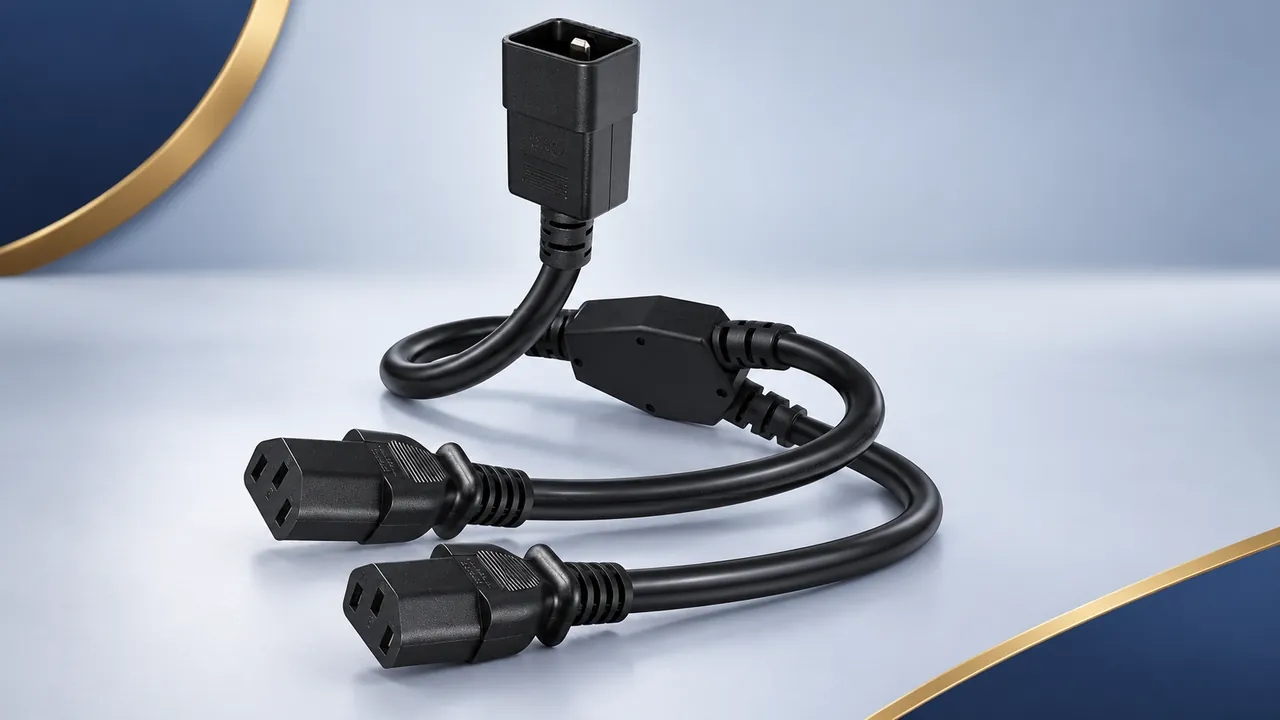
Include the conductor arrangement, nominal size, insulation or jacket requirement and finished length. If the route needs a right-angle connector, state the orientation relative to the equipment. For a splitter, identify the number of branches, each branch's connection and individual lengths.
Where an installation has an environmental or mechanical requirement, describe it explicitly and request confirmation for the offered construction. Do not infer an exposure rating from the connector's shape.
A power-cord enquiry checklist
- Exact catalogue link and selected option.
- Supply-end interface or regional plug reference.
- Equipment inlet and corresponding cable connector.
- Required electrical duty and stated assembly rating.
- Conductor arrangement, nominal size and cable construction.
- Finished length, measurement points and connector orientation.
- Branch dimensions or locking details where relevant.
- Quantity, destination, drawing revision and requested documents.
For a regional-plug enquiry, also browse Regional & Appliance Power Cords. For a branching or extension arrangement, compare Extensions, Splitters & Power Components.
Build an identification pack for both ends
A clear photograph can help explain a connection, especially when a part reference is unavailable. Show the complete mating face, the surrounding equipment and any relevant connector marking. Keep photographs associated with a written description so the receiving interface, cable end and direction of the assembly remain clear.
For a prepared enquiry, label the two ends A and B. Use those labels consistently in the drawing, product reference and quantity list. If a photograph shows an existing cord, identify which details should be retained and which should change. This avoids treating a convenient reference image as an instruction to reproduce every visible feature.
Where equipment documents give an inlet reference, include that reference alongside the picture. If the equipment team has a required cord specification, provide it rather than asking the supplier to infer the full requirement from the inlet. The enquiry can then focus on the selected interface and the complete proposed assembly.
Check the cable exit and available space
Describe the clearance around the equipment connection. A straight and an angled version can have different installation geometry, so identify the requested cable-exit direction on a labelled view. Include nearby enclosure surfaces, adjacent connections or other constraints where they affect the specified shape.
Separate a regional plug request from an interconnection request
The equipment end may remain the same while the supply end changes for another project. State the destination and actual supply-side interface for each required version. Keep each version on a separate line with its quantity and product reference so the offer can identify the corresponding complete cord.
For a lead between equipment, describe both receiving points. Identify the UPS, PDU or other equipment connection where relevant and retain the interface references from the equipment documentation. Avoid using a general description such as “server cable” as the only definition of the supply end.
When several versions are required, maintain a simple version matrix: supply end, equipment end, cable construction, length and quantity. Include any required document or marking for each version. The quoted versions should follow that same matrix so it is clear which construction and commercial details apply to each line.
Give extensions and splitters their own drawing details
A branching power lead needs more detail than a single end-to-end measurement. Identify the incoming connection, number of branches and outgoing connection on each branch. Show where the overall length is measured and where individual branch lengths begin. If a branch needs a different orientation, label it separately.
Keep the requested electrical duty and the proposed assembly information with the drawing. Do not assume that multiplying connectors also multiplies the permitted load. Ask for the rating and configuration of the actual offered assembly, including the way the requested branches are described in the quotation.
For an extension lead, identify both mating sides and the cable between them. Explain whether the purpose is additional reach, a changed connection orientation or a specific equipment arrangement. This gives the supplier a clear description of the intended product while keeping suitability review tied to the real project requirements.
Review the quotation line by line
Use the original enquiry as the comparison reference. Check the supply end, equipment end, orientation, cable description and finished dimensions before comparing price. If the quotation includes an alternative connector or cable, ask for that difference to be identified explicitly rather than hidden inside a shortened description.
| Review item | What the quotation should identify |
|---|---|
| Connections | The exact specified reference at each end and any orientation requirement. |
| Assembly construction | Selected cable, conductor arrangement and requested finished form. |
| Electrical information | The offered product-specific rating and relevant market or project scope. |
| Dimensions | Finished length, measurement points and labelled branches where applicable. |
| Supporting information | Drawing revision and any requested documents, markings or inspection details. |
Then discuss quantity, packaging, samples, price, timing and delivery terms for the actual offered version. Keep technical questions visible until they are resolved so an order confirmation refers to the same build that was reviewed.
An example of a well-defined equipment-cord enquiry
In a hypothetical project, a buyer needs cords for equipment with a documented C14 inlet. The RFQ names the required C13 cable connector, separately identifies the supply-end connection, and gives the selected cable and length requirements. It includes a labelled view if the equipment end needs a particular exit direction.
The message also states the equipment's supply requirement, destination, quantity and any requested document review. It asks for the proposed assembly reference and rating to be confirmed in the quotation. The buyer has therefore described a product for review without inferring every electrical or approval detail from the C13/C14 family name.
If another version is needed for a different supply connection, list it as a second version. Retain the shared equipment-end requirement and identify each changed field. This makes the technical comparison easier and reduces ambiguity when several cord versions appear in the same purchase request.
Frequently asked power-cord enquiry questions
Is a photograph enough to identify the complete cord?
Use a photograph to support identification, then provide the written end references, cable description and dimensions. Ask for the exact proposed build in the response. Images can show a family or a previous configuration, so they should remain linked to the specification being requested.
Can the same equipment connector be quoted with several supply ends?
List the requested versions and let the supplier review each configuration. Include the destination and required supply connection for every line. Availability, product-specific ratings and documents must be discussed for the actual versions rather than assumed to be identical.
What should a sample review confirm?
State the purpose of the sample and the details to be checked, such as connection geometry, length or the proposed assembly reference. Sample availability and commercial arrangements require agreement for the actual enquiry. Retain the reviewed drawing and selected construction with any subsequent order.
Request the cord against a confirmed reference
Keep the enquiry reference on any later clarification so that changes to one end, length or cable option remain traceable. When reviewing several versions, confirm the exact version and quantity on each line rather than relying on an earlier photograph or a general family description.
Send the two-end description and the equipment requirement with your RFQ. Use the RFQ & Ordering Guide to keep the quoted build, drawings and commercial details together.
Discuss an Equipment Power Cord
Identification background: Interpower appliance-coupler chart; general standards context: IEC appliance-coupler publication summary. These references are not evidence of approval for a quoted product; confirm the applicable current specification for the project.