SPECIFICATION BEFORE SELECTION
Bring the complete cable requirement together
A useful cable enquiry describes more than a product name. Start with the equipment and installation, then identify conductor, insulation, nominal size, core arrangement, finished length and both receiving interfaces. Compare these details with the selected product specification.
Use this guide to prepare the enquiry. Final selection must follow the project design, the actual product documentation and the requirements that apply at the installation.
Explore the catalogue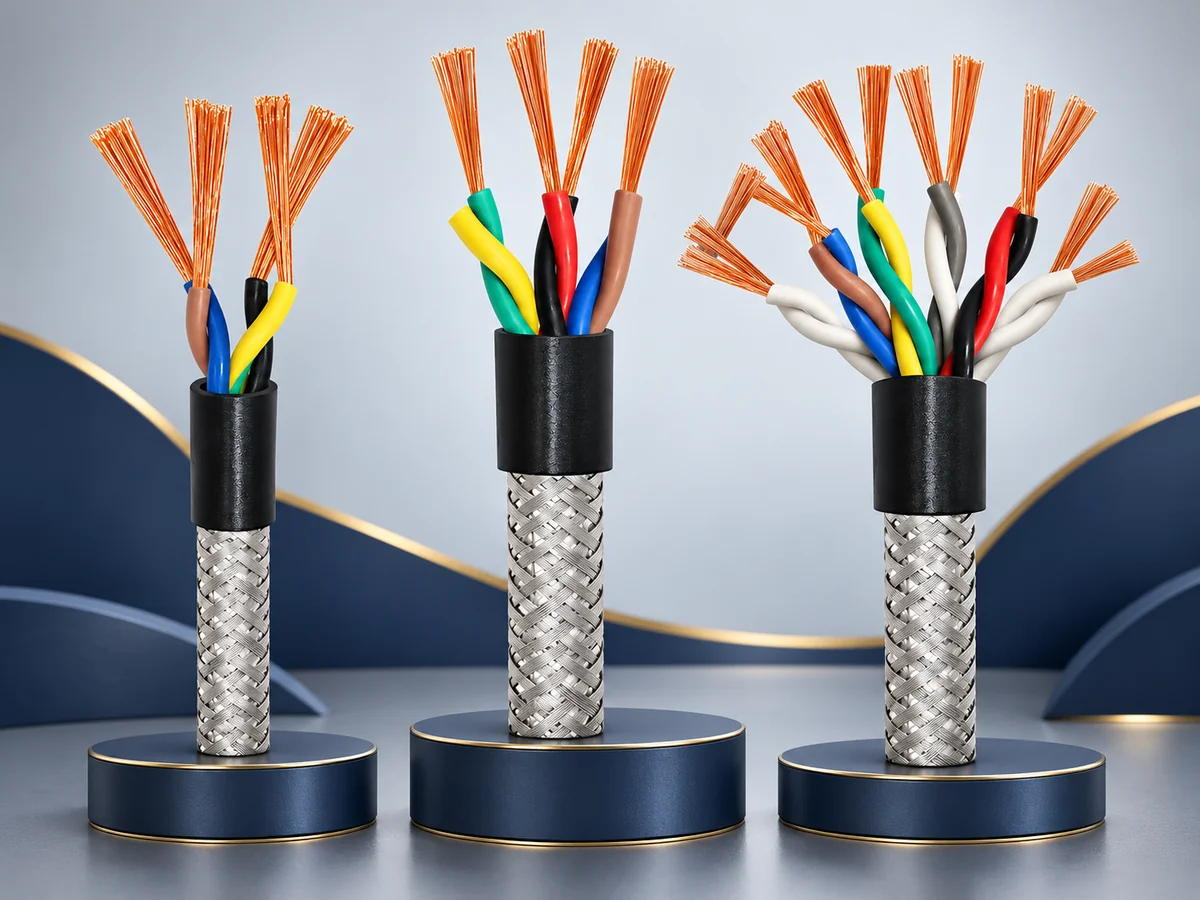
01 · THE ACTUAL DUTY
Define the electrical and mechanical requirements
Describe what the cable connects and where it will be used. A fixed panel connection, a moving machine lead and an outdoor battery connection present different questions. State the conditions rather than relying on a broad label such as industrial, heavy-duty or waterproof.
Electrical requirement
Provide the circuit or equipment reference, operating voltage and required current information. Include any signal, charging or data requirement and keep it attached to the selected assembly.
Installation and movement
Explain whether the route is fixed, occasionally repositioned or repeatedly moving. Add routing space, bend constraints, entry points and any mechanical protection required.
Environment and documents
Describe temperature, moisture, oil, sunlight or other exposure relevant to the project. Identify any mandatory standard or document and its required scope.
02 · MATERIAL AND CONSTRUCTION
Compare conductor and insulation as separate choices
The conductor specification and insulation specification should both appear in the request. A material name alone does not define the complete cable or establish its suitability for every application.
| Item | Information to include | Useful catalogue route |
|---|---|---|
| Conductor | Specified material, solid or stranded construction, nominal size and any required strand detail. | Copper and tinned-copper options |
| Insulation | The selected material and wire style; the actual product rating and project conditions. | Silicone wire / PVC equipment wire |
| Sheath and protection | Outer covering, shielding or armour where required, plus diameter and installation constraints. | Industrial and power cables |
When a product page offers several constructions, identify the one you want quoted. Do not combine the rating from one option with the size or sheath of another.
Read the selected conductor option
Use the conductor-material field and the selected option on the product page. A listing may offer more than one material or finish. State the exact material you need rather than copying all alternatives into one specification. If tinned copper is selected, confirm that conductor finish, the base conductor and its construction in the offered variant; the finish does not by itself establish a different size or a universal electrical rating.
Compare insulation against the same duty
For silicone and PVC candidates, record the insulation description and the product-specific service information separately. Compare each candidate against the same temperature, movement and exposure requirements. A material name alone does not decide which wire is suitable. Keep the required operating temperature separate from the selected product's documented service or installation limits.
03 · DIMENSIONS WITHOUT AMBIGUITY
Keep gauge, core count and finished length distinct
Nominal conductor size
Use the required AWG or mm² notation. If a drawing shows both, identify which controls and retain its tolerance or construction reference. Cable outside diameter is a separate dimension.
Cores, pairs and identification
State the number of conductors and any pair arrangement. Include identification requirements, protective-conductor needs where specified, and the intended connection schedule.
Finished length
Define the measurement points, unit and tolerance. For a branched assembly, specify the overall lead and each branch rather than giving one unqualified length.
State each core colour or numbering requirement and its connection role in the drawing. For loose wire or bulk cable, identify whether you are requesting reels, cut lengths or another packing format, with the length and quantity for each. Packing availability and any marking or labelling requirement are reviewed for the actual request.
For a practical RFQ example, read AWG and mm² in a cable enquiry.
04 · THE RECEIVING INTERFACES
Specify both mating ends
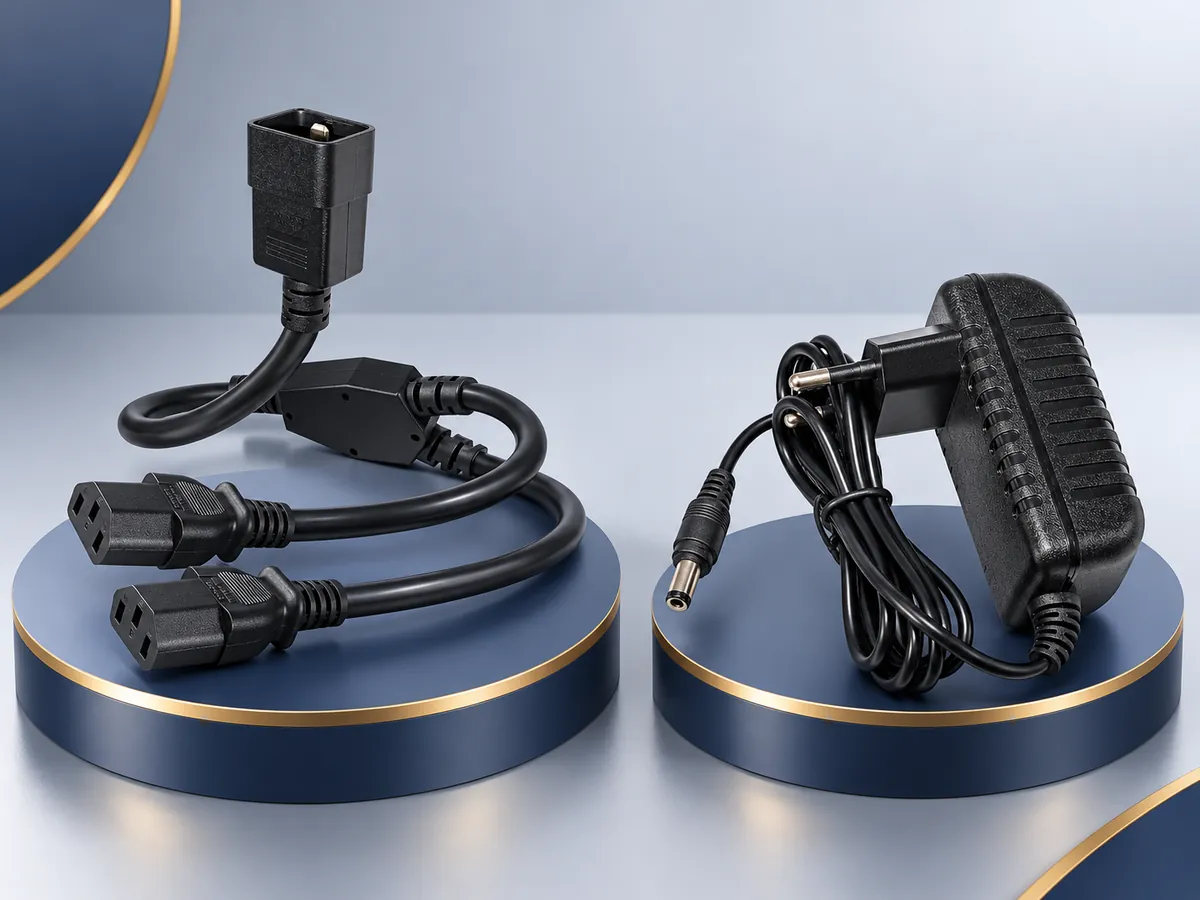
Record the equipment inlet, socket, terminal or mating connector at each end. Include connector dimensions, contact count, locking arrangement, exit direction and the pin assignment where relevant. A photograph helps identify the family; a confirmed drawing resolves the details.
- Power cord: identify the supply connection and the equipment connection.
- DC lead: identify both connector sizes and the required polarity or pinout.
- Control assembly: identify the core schedule, shielding interface and termination details.
Use the custom cable enquiry guide when the requested arrangement needs a drawing or configuration review.
| Connection type | Details to keep in the selected specification |
|---|---|
| Every mating pair | Label End A and End B; identify the source and receiving device where power is involved. Specify the required plug or socket gender, contact arrangement and connector reference. Include a pinout with the mating-face view, contact numbering and conductor mapping. |
| DC barrel connection | Give the outer diameter, inner diameter and mating or insertion length for each end. State centre-positive or centre-negative polarity from the equipment requirement, or provide the controlling connection drawing. Do not infer polarity from connector shape. |
| USB-related product | State whether the selected product is needed for power, charging, data or a documented combination, with the receiving equipment and required function. A USB-shaped connection does not prove a voltage-conversion or negotiation function. If one is required, identify it in the actual product specification and confirm the documented input and output conditions. |
| IEC equipment cord | Identify the actual receiving IEC inlet from the equipment document and the corresponding cable-end connector. Separately state the supply socket or destination-market plug required for the complete cord. Do not infer a universal assembly rating from a connector designation. |
| Angled or locking connector | Show the cable-exit direction and available space around the equipment, including nearby sockets or enclosure surfaces. State whether a locking feature is required and confirm that it is present in the selected connector. |
| Splitter or branched assembly | State the number of branches, the connection on each branch, and each branch's length and measurement points. Keep the trunk length, branch lengths and individual connection assignments separate. |
READY FOR A PRODUCT REVIEW
A compact specification checklist
- Product link or clearly identified reference.
- Application, destination market and relevant project requirements.
- Conductor, insulation, sheath, nominal size and core arrangement.
- Required ratings for the selected construction.
- Both connections, pinout or polarity, length and drawing revision.
- Quantity and any requested samples, documents or inspection criteria.
Product photographs can show a series with several configurations. Keep the selected option and approved drawing with the enquiry, and resolve any visual or written discrepancy before order confirmation.