Start with the exact construction and project requirement
A useful mineral-insulated cable enquiry identifies the required cable construction, conductor arrangement, nominal size, sheath, selected ratings, installation conditions and project-document requirements. Attach the controlling specification or drawing and state the quantity and supplied lengths. These details are more useful than a request based only on the words mineral insulated or fire resistant.
Names used across industrial cable listings can describe different constructions and intended uses. A procurement comparison therefore needs a clear technical reference for each candidate. Do not assume that products placed in one broad catalogue family are interchangeable, or that a particular fire-related claim applies to every size and configuration.
The mineral-insulated and fire-resistant cable range is a starting point for finding product references. This article explains the information to prepare for an enquiry. It does not assign a fire classification or installation approval to a product that has not been checked against the actual requirement.
1. Identify whether the request is for wiring, heating or another duty
Begin with the cable's function. State whether it is intended to carry power, serve a heating purpose or fulfil another defined duty in the project. Include the equipment or circuit reference and the location in the installation. A familiar cable-family term does not resolve the actual application.
If the request comes from a consultant specification, bill of quantities or equipment drawing, provide the relevant document and revision. Identify the line item that must be quoted. Mark any alternatives that your team is willing to consider separately from requirements that are fixed.
This is especially useful when the same enquiry package includes several cable families. Give each required construction its own schedule line. Keeping wiring and heating requests distinct prevents an offer for one duty from being compared against a different one merely because both use a similar category name.
2. Describe the cable layers rather than relying on a label
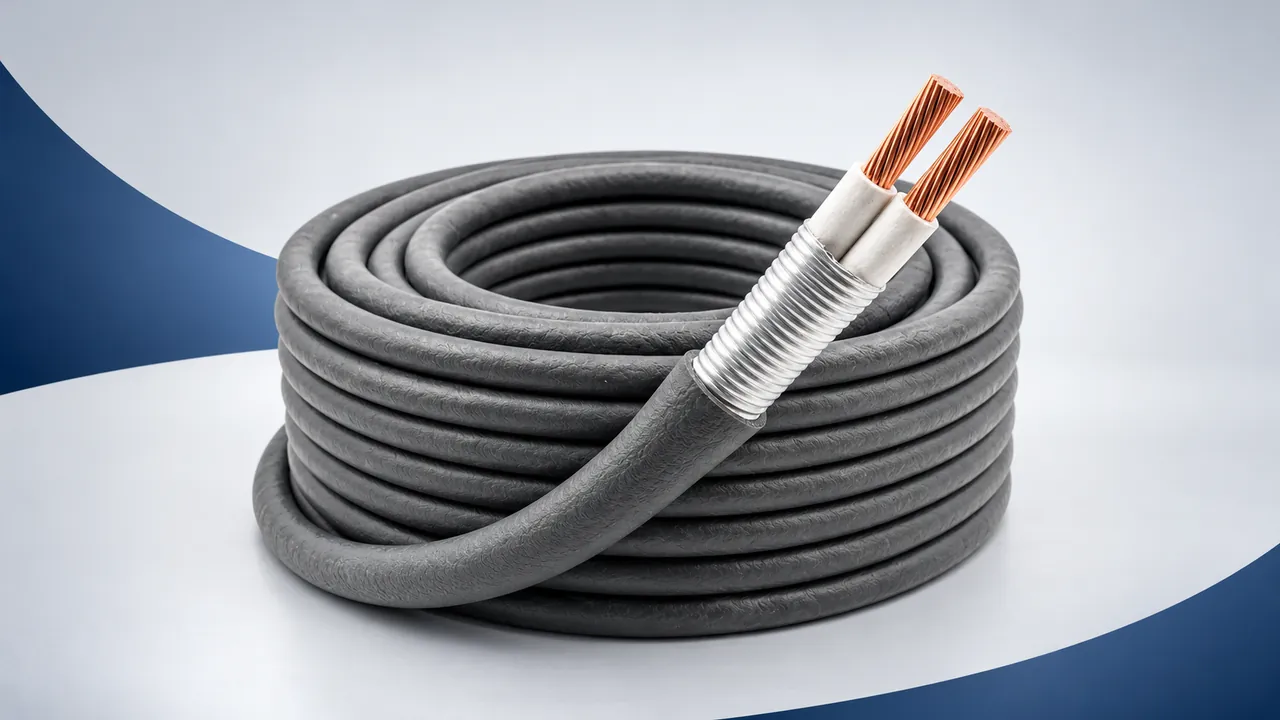
A traditional mineral-insulated construction can use conductors within a compacted mineral insulation and an outer metallic sheath. That construction description is background, not a specification for every product carrying a related catalogue title. The RFQ still needs to identify the actual product and its documented layers.
Ask for the conductor material, the stated insulation construction, the metallic sheath where applicable, and any additional outer covering to be described clearly. Where the catalogue presents several constructions, retain the exact option you want reviewed. Do not combine the sheath description from one option with the rating or dimensions of another.
A construction drawing can make the enquiry easier to compare. Label the conductor arrangement and relevant layers, then identify which drawing or datasheet controls. Photographs help locate a product family, but they should not be expected to communicate every material and dimension.
3. Keep conductor count and nominal size explicit
State the required number of conductors and the nominal size of each conductor. Use the notation from the controlling specification, such as mm² or AWG where applicable, and retain any required construction detail. If a protective conductor or another distinct conductor is part of the design, show its role and size separately.
For several sizes, use a line-by-line quantity schedule. Avoid a request that gives one total quantity after a list of different core counts and sizes. Each candidate cable should be traceable to the exact line it is intended to fulfil.
Check that product title, parameter list, selected option and drawing refer to the same core arrangement. Some catalogue photographs illustrate a series. If an image differs from the written requirement, raise the discrepancy and ask for the selected configuration to be confirmed rather than choosing whichever detail seems most convenient.
4. Specify the sheath, covering and dimensional constraints
The sheath and any outer covering are separate items to identify in the request. State the material or construction required by the project and the environmental exposure that the technical team needs to review. If a coating or covering is mandatory, name it instead of assuming that the photographed colour defines the delivered construction.
Include relevant diameter limits and receiving hardware. Entry size, gland or termination arrangement, enclosure clearance and the cable route can all create dimensional questions that a conductor-size description alone does not answer. Provide a drawing where the available space is critical.
Do not borrow a bend limit or mechanical claim from an unrelated product. Identify the installation requirement and obtain the applicable product information. A construction that is suitable for one route or handling method should not be treated as automatically suitable for every project condition.
5. Separate operating requirements from fire-test requirements
Give the operating voltage and other electrical requirements for the actual circuit. Describe normal temperature and installation conditions separately from any fire-exposure or circuit-integrity requirement in the project. These are different parts of the enquiry and should have distinct supporting references.
If a fire test, circuit-integrity classification, smoke requirement or another standard is mandatory, list the exact reference and the evidence required for review. Include the version or project specification reference where it controls the purchase. A broad adjective such as fireproof does not provide the same information.
Ask how any offered document relates to the selected cable construction, size and intended installation. Do not assume a document applies to every member of a product family. The same care is needed when comparing a catalogue statement with a consultant's schedule: matching words are not sufficient without matching scope.
6. Describe the installation route and end arrangements
Provide the route length, relevant entry points and any installation constraints that need to be reviewed. Explain whether the request is for bulk cable, cut lengths or a finished assembly. State how supplied length is measured and identify any tolerance required by the project.
For an assembly, specify both end arrangements and the receiving equipment. Include the required termination or sealing arrangement, connection identification and any drawing that defines the finished item. Do not treat the termination hardware shown in a series illustration as automatically included in the cable quotation.
Installation and termination procedures need to follow the applicable manufacturer and project documentation. Use the RFQ to request the documents and identify responsibilities, rather than relying on a general website article as an installation instruction. If the design is unresolved, list the open questions for technical review.
7. Build a document request that can actually be checked
Write a short document schedule beside the product schedule. For every required item, state its purpose and the construction it needs to cover. Examples of enquiry fields include a product datasheet, a dimensional drawing, a relevant test reference or an agreed inspection record. These are requests for review, not statements that every document is available for every product.
Distinguish an information request from a contractual acceptance requirement. If your project cannot approve the cable without a particular document, make that clear before the quotation is finalised. A request added after order confirmation may change what needs to be reviewed.
Keep the proposed product reference and document revision together. Where an alternative is offered, ask for a clear explanation of differences against your schedule. A comparison is easier to assess when it identifies what changed instead of repeating the broad category name.
8. Use a structured RFQ schedule
| RFQ field | Information to provide |
|---|---|
| Duty and reference | Power, heating or other defined use; project line item and controlling document. |
| Construction | Conductor arrangement, nominal size, insulation, sheath and any covering. |
| Electrical requirements | The circuit requirement and the selected product rating information to be checked. |
| Project classification | Exact standard, test or document scope where mandatory. |
| Supply format | Bulk or finished configuration, lengths, ends, quantity and relevant dimensions. |
| Commercial information | Destination, sample request if applicable, and requested delivery date. |
When a field is not yet decided, show it as an open question. Avoid filling it with a plausible value simply to make the schedule look complete. The purpose of the enquiry is to establish the selected requirement and resolve gaps before the order reference is agreed.
9. Review the offered configuration before order confirmation
Compare the proposed cable with the original schedule one line at a time. Check core count, size, construction, sheath, supplied length, ends and document scope. Confirm that the quotation describes the same configuration as the technical attachment and that any accepted deviations are visible in the record.
Discuss sample requirements with a defined purpose. If a sample is requested to review a particular detail, identify the detail and the selected construction. Availability, cost, minimum quantity and timing need confirmation for the actual enquiry. Do not infer these terms from another product.
Retain the approved drawing revision and quotation together. A later change to length, core arrangement, covering, termination or documentation should be identified and reviewed for its effect on the offer. This keeps the purchase tied to one clear technical and commercial reference.
Questions buyers often need to resolve
Are mineral-insulated and fire-resistant cable names enough to establish equivalence?
No. Compare the exact construction, rating information, application and required test or document scope. Related catalogue names can help you discover candidates, but the selected specification is what needs to be reviewed.
Can a photograph establish the required core count?
Use the confirmed drawing and written configuration. A series image can show another arrangement. Highlight any discrepancy in the RFQ and keep the required core count explicit.
Should a document request be sent before the quotation?
Yes, identify mandatory documents and acceptance criteria in the RFQ so their availability and relevance can be considered with the selected construction. Do not assume that a general product-family statement resolves the document requirement.
Send one complete project reference
Browse the relevant cable family, then combine the selected reference, specification, quantity and destination. The selection guide and RFQ guide can help organise the remaining details. When ready, contact Relia Cables with the drawing revision and the questions that still need review.
Technical background: Mineral-insulated construction background. This general reference does not establish a rating, approval or available configuration for a Relia Cables product; check the selected product documentation.